Hafala Script Font for Handmade Creators
As someone who designs printable wedding invites, cuts vinyl labels for small-batch candles, and creates SVG bundles for Etsy sellers, I know how much a single font can shape the feel—and sales—of a product. That’s why Hafala has become one of my go-to Script Handwritten fonts. It’s not just pretty; it’s purpose-built for makers who need elegance *and* practicality in equal measure.
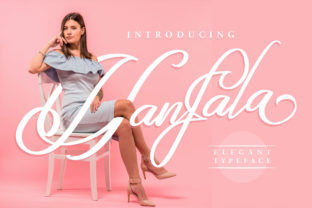
Hafala is an elegant, modern script font with a friendly, approachable rhythm—not overly formal, not too casual. Its letterforms flow with gentle curves and subtle contrast, giving it that romantic, handwritten charm without sacrificing clarity. You’ll notice how the lowercase “a,” “g,” and “y” have soft, open shapes—ideal for readability at small sizes—and how the capitals carry just enough personality to stand out on signage or packaging, but never overwhelm.
I’ve used Hafala across dozens of real-world projects: lavender-scented candle labels (3/4" wide), boutique gift tags printed on kraft cardstock, digital planner stickers, wedding welcome boards cut on my Cricut Maker, and even heat-transfer vinyl for linen tea towels. In every case, Hafala delivered warmth and cohesion. Customers comment on how “inviting” the packaging feels—and that emotional resonance starts with typography.
For physical product labels—especially on jars, bottles, or apothecary tins—Hafala shines at 10–14 pt in print. Its spacing holds up well in offset and inkjet printing, and its clean terminals reduce fraying when cut at 1.5 mm on Silhouette Cameo or Cricut machines. On tiny sticker sheets? Use the standard weight (not light or bold variants) and avoid ultra-thin swashes for sub-12 mm applications. I always test-cut a single word first—“Hand-poured” or “Small Batch”—to confirm edge fidelity before running a full sheet.
When designing invitations or greeting cards, Hafala works beautifully as a display font for names, dates, and headings. Pair it with a clean sans serif—like Montserrat or Poppins—for body text or details. That contrast keeps things legible while letting Hafala’s personality anchor the design. For wall art or framed prints, I often layer Hafala over a muted watercolor background and add a single ligature—like the “fl” or “th” alternate—to elevate the composition without cluttering it.
It’s also surprisingly versatile across seasons and themes. I used Hafala last spring for botanical-themed baby shower invites (paired with a delicate leaf SVG), then reworked it for rustic fall mugs (“Gather & Sip”) using only uppercase letters for impact. For holiday product packaging—think gingerbread cookie boxes or handmade soap sets—I keep the font size generous and limit text to three words max. Hafala doesn’t need long paragraphs to make a statement.
One thing I appreciate: Hafala includes multiple stylistic alternates and optional swashes—but they’re tasteful, not excessive. The OpenType features let me swap in a more decorative “Q” for signage or use the connected “&” ligature on boutique tags. No extra plugins needed. Files come in OTF and TTF formats, compatible with Canva, Adobe Illustrator, Silhouette Studio, and Cricut Design Space. While it supports basic Latin multilingual characters (including accented vowels for French, Spanish, and German), it’s best suited for English-first projects—so keep that in mind if you sell globally.
Readability matters most where customers interact directly with your work. On product tags, Hafala reads clearly at 8 pt when printed crisp and black on cream cardstock. On matte-finish tote bags? Stick to short phrases (“Made With Love” or “Hello, Summer”) in 20+ pt—its natural stroke variation adds texture without compromising legibility from arm’s length. For digital printables like habit trackers or gratitude journals, I use Hafala for section headers and pair it with a light-weight serif for notes—creating visual hierarchy that feels intentional, not accidental.
Font pairing is where Hafala really earns its place in my design toolkit. As a Script Handwritten typeface, it needs balance—not competition. I avoid pairing it with other scripts or overly decorative fonts. Instead, I reach for neutral, functional companions: a warm sans serif for modern brands, a low-contrast serif for vintage apothecary vibes, or even a geometric mono for contrast in social media graphics. One consistent rule: let Hafala lead the emotion, and let the secondary font handle the information.
If you’re selling physical goods, templates, or digital downloads, double-check Hafala’s commercial license. It permits use in unlimited physical products (stickers, mugs, apparel), client work, and digital assets—including SVG files, Canva templates, and printable bundles—as long as you’re not reselling the font file itself. That means you can embed Hafala in your PDF planners, convert it to vector paths for cutting machines, or use it in mockups for your Etsy listings—no extra fees or attribution required.
What makes Hafala different from other premium script fonts isn’t just its aesthetic—it’s how quietly it supports your workflow. It cuts cleanly, scales predictably, pairs intuitively, and carries emotional weight without demanding attention. Whether you’re hand-lettering a farmhouse sign or building a cohesive brand identity for your candle line, Hafala meets you where you are: in the studio, at the cutting mat, or deep in Canva at midnight. It’s not just another font. It’s a reliable collaborator—one that helps your handmade work feel both personal and polished.